

English Bellow
Siempre la historia la escriben los ganadores, y los ganadores por algo ganan. Black Sabbath inventó el Heavy Metal. El primer acorde de Iommi en el disco debut de la banda despeja cualquier duda al respecto. Sin embargo, siempre hay otros que quedan a la sombra de los ídolos, aunque los hayan influenciado más de lo que la mayoría de sus seguidores se imagina.
Nadie se atrevería a negar el lugar de Black Sabbath en el Olimpo del Metal, pero algo siempre fue controversial: ¿hasta qué punto la banda era “ocultista” o “satánica”? Todos sabemos que más allá del contenido de algunas letras, también hay temas en los que el clamor al dios cristiano es innegable y, obviamente, las famosas cruces de Black Sabbath no están invertidas, sino que se supone simbolizan un deseo de protección.
Seamos blasfemos y recuperemos a una banda desconocida por muchos y olvidada por otros, que tuvo influencia sobre Black Sabbath y fue, de hecho, el grupo al que podemos atribuir el ingreso del mismo Satanás al mundo del rock. Hablamos de los estadounidenses Coven (palabra que significa “aquelarre”). Si les gusta Black Sabbath y no saben nada de Coven, prepárense para sorprenderse: quedan advertidos.
Coven se formó a fines de la década del ’60, y si bien estuvieron separados entre 1974 y 2007, actualmente la banda se encuentra activa. La figura principal es su cantante, la cautivante Jinx Dawson. Quizá sea esta la causa de que Coven no haya recibido el reconocimiento que merece, una cuestión puramente machista. Otra causa puede ser que, en 1970, la revista Esquire publicó una foto del tristemente célebre Charles Manson saliendo de una disquería con el vinilo de Coven. En esa época, el sello discográfico de Coven ya venía siendo presionado por distintas iglesias para que les anulara el contrato, y la banda recibía amenazas de todo tipo. El episodio de Manson hizo que el disco de Coven saliera de circulación.
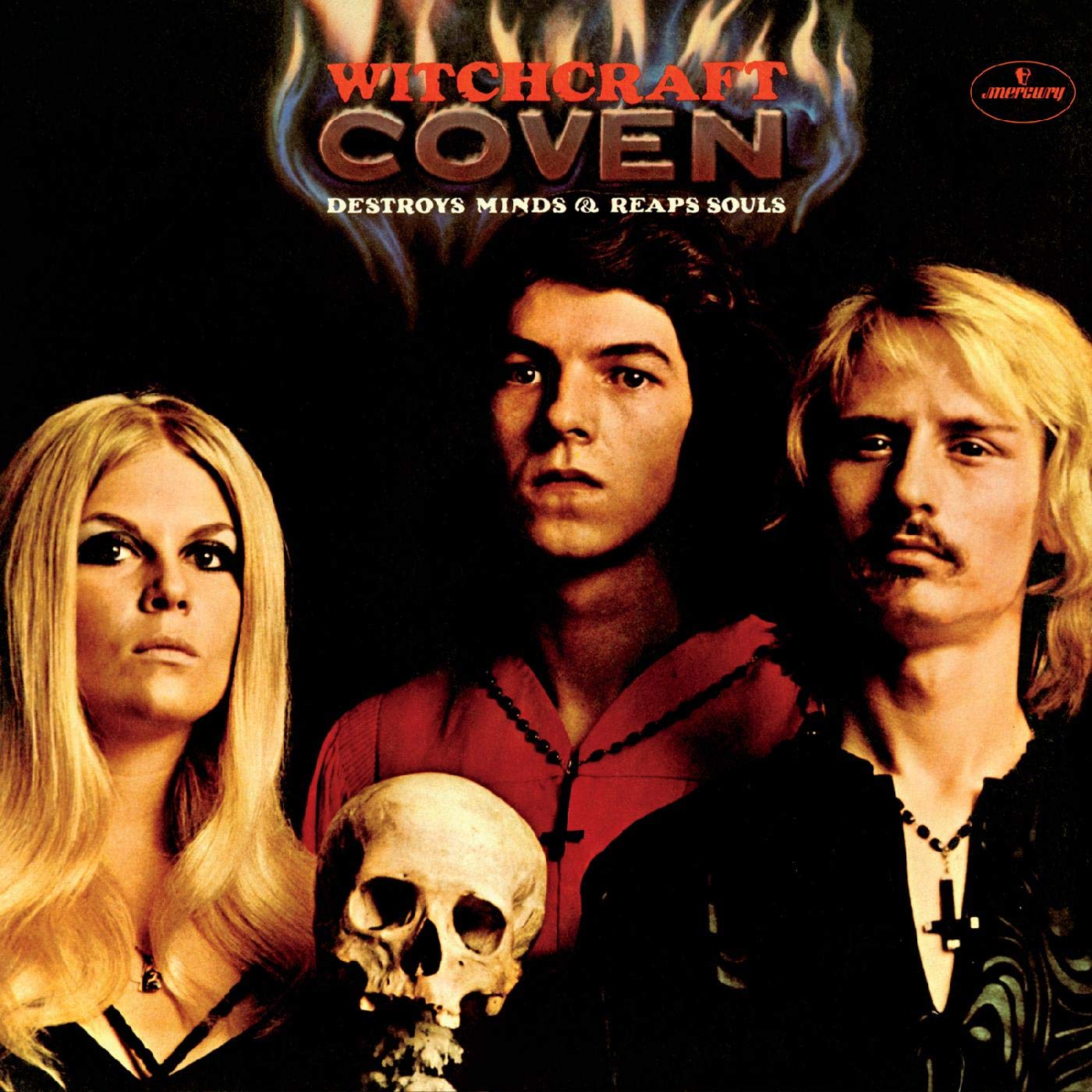
Fueron los primeros en usar el signo de los cuernos con la mano. Así es, no lo inventó Ronnie James Dio. La prueba indiscutible está en las fotos de su primer álbum editado en 1969 por Mercury: “Witchcraft Destroys Minds & Reaps Souls”. Jinx Dawson comenzaba y terminaba los conciertos con ese gesto ya desde 1968. Vale la pena recordar que el disco debut de Black Sabbath salió en 1970 y el de Elf con Dio en 1972. En esas fotos, además de ver el signo de los cuernos, podemos apreciar a los integrantes de la banda con cruces invertidas colgando de sus cuellos, así como imágenes de una misa satánica. De hecho, el último track del disco es el audio de dicho ritual, y por supuesto, todas las letras son heréticas. Los miembros de Coven son satanistas en la vida real, más allá de la música.

Artwork del primer disco de Coven (1969)
Su estilo musical puede considerarse Rock Psicodélico con momentos de Hard Rock. No obstante, no es una banda que le haya simpatizado a los hippies, dada su propuesta absolutamente “oscura”. No era Rock de colores llamativos, flores y arcoíris: era Rock de calaveras, velas y cruces invertidas.
El bajista original de Coven fue “Oz” Osborne (no confundir con Ozzy Osbourne). El primer tema del disco de 1969 se llama “Black Sabbath” y el séptimo “Wicked Woman” (no es ni “Evil Woman” ni “Wicked World” de la banda inglesa).
Se sabe que los miembros de Black Sabbath conocían a Coven, ya que en la época en que Black Sabbath todavía era Earth, los estadounidenses telonearon a bandas muy conocidas de la escena británica como Cream y The Yardbirds, banda en la que tocaba Jimmy Page, un seguidor de Coven. De hecho, Jinx hizo parte del vestuario del famoso guitarrista, así como de Robert Plant.
En una entrevista televisiva para MTV con Martha Quinn en 1986, Iommi negó conocer a Coven, algo que le costó creer a la conductora, que tenía el primer vinilo de la banda estadounidense en la mano, y se notaba que logró incomodar mucho al músico. Es poco probable que Iommi no conociera a Coven, si consideramos que la banda había tocado en Inglaterra en la época de Earth y además que el sello Vértigo, encargado de editar el debut de los ingleses, era una filial de Mercury. Dado que Mercury tenía entre sus artistas a Coven, es posible que el guitarrista haya reprimido el recuerdo… De hecho, Vertigo contrata a Black Sabbath justo cuando Mercury saca de circulación a Coven tras el “incidente” de Manson.

Logo de la banda estadounidense.
A su vez, cuando salió el primer disco de Black Sabbath, un crítico inglés muy prestigioso (de esos cuyas reseñas leen los músicos), Lester Bangs, de la revista Rolling Stone, describió a la banda como “una mezcla entre Cream y Coven”. Incluso afirmo: “son algo así como la respuesta inglesa a Coven”.
Más curiosidades: se supone que los miembros de Black Sabbath tomaron el nombre de la película italiana de terror dirigida por Mario Bava, sin embargo, el título original de la misma es “I tre volti della paura” y en esa época el film se llamó “Black Sabbath” solamente en Estados Unidos, mientras que en Inglaterra y el resto de Europa llegó como “Three Faces of Fear”.
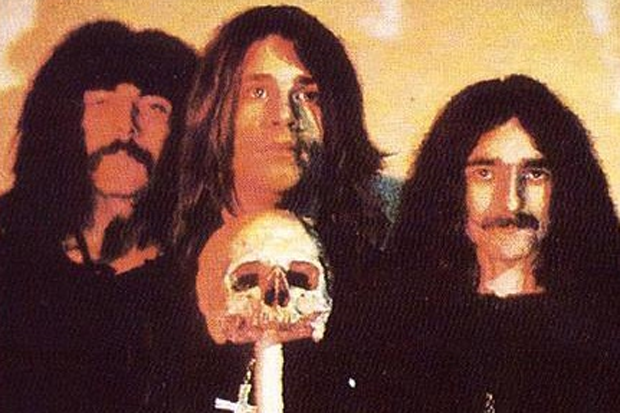
Cuando salió el disco de Coven en 1969, el afiche promocional, en el que se ve a la banda y la cantante sostiene un verdadero cráneo humano en su mano, estuvo por toda Inglaterra. Al salir el primer álbum de Black Sabbath, el afiche era exactamente igual, excepto que el cráneo que sostenía Ozzy no era verdadero.
-
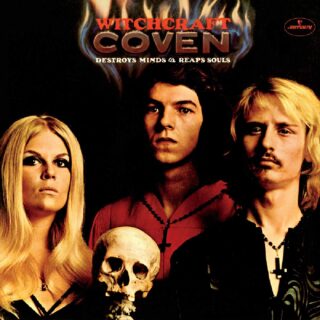
- Coven 1969
-

- Black Sabbath 1970
3. Coven (1969) y Black Sabbath (1970)
Hay una anécdota de un concierto en Memphis en 1971. Coven había preparado el escenario para la misa satánica colocando velas encendidas. Black Sabbath iba a tocar esa misma noche, y sus integrantes soplaron las velas cantando el “Feliz Cumpleaños”. Esto enfureció a Jinx, que, para vengarse, pintó con sangre una cruz invertida en la puerta del camarín de los ingleses, quienes, al verla, la borraron rápidamente, aterrorizados.
Otro ícono del Heavy Metal que fue influenciado por Coven -pero no lo niega- es King Diamond, que los vio en vivo en un concierto en Dinamarca en 1971. También es sabido que Dio y Ritchie Blackmore trataron de incorporar al baterista de Coven, Steve Ross, a la banda que ellos habían formado: Rainbow, cuyo nombre tomaron del famoso bar en California, al que también iba Lemmy y donde Coven tocaba muy seguido.
La cantante Jinx también fue pionera en el uso de maquillaje: usaba el empleado para cadáveres (un antecedente del corpse paint típico del Black Metal) y en los shows entra y sale de un ataúd, es el mismo que usarán para ella el día que muera. Hablando de Black Metal, Nergal de Behemoth tiene a Coven como una banda de culto. Alice Cooper también conocía –y se dice que le temía- a Jinx Dawson.
El revisionismo histórico no pretende, en este caso, reducir en lo más mínimo la importancia indiscutible de los creadores del Heavy Metal, sino rescatar a otra banda que merece ser reconocida, al menos, como la primera en usar el signo que todos los metaleros hacemos con la mano; la primera en introducir el satanismo –verdadero- en el Rock y la primera, de hecho, en tener un tema llamado “Black Sabbath”.
Por: Marcos De Caro
History is always written by the winners, and there are reasons why they won. Black Sabbath created Heavy Metal. The first chord played by Iommi in their debut album does not leave any doubt about it. However, there are always others who are shadowed by the idols, even though their influence on those idols has been bigger than what their followers could imagine.
No one would deny the place of Black Sabbath in the Mount Olympus of Metal Music, but something has always been controversial: to what extent were they really into the occult or Satanism? Everybody knows there are certain elements in their lyrics pointing to that direction, but it is also true some lyrics address the Christian god and, obviously, the famous Black Sabbath crosses were never inverted, on the contrary, they symbolized a desire for protection.
Let’s be blasphemous and praise a band which is unknown to many and was forgotten by others, a band that had a noticeable influence on Black Sabbath and was, in fact, responsible for the introduction of Satan himself into the world of Rock Music. We are talking about Coven. If you like Black Sabbath and you don’t know anything about Coven, get ready to be surprised: you have been warned.
Coven was formed during the late sixties, and even though they split from 1974 to 2007, the band is active nowadays. The leader is their captivating singer, Jinx Dawson. Maybe that is one of the reasons why Coven hasn’t got the recognition they deserve, we live in a sexist world. Another reason was the Esquire Magazine publication of a picture of Charles Manson getting out of a record shop holding Coven’s LP in 1970. Back then, several churches were putting pressure into the record label Mercury to finish the contract with the band, which had also been threatened in different ways. The Manson incident made the label take the album out of the market.
They were the first ones who used the sign of the horns in Rock Music culture. That’s right, it was not Ronnie James Dio. The undisputable prove is to be found in the photographs included in their first album released in 1969 via Mercury: “Witchcraft Destroys Minds & Reaps Souls”. Jinx Dawson used to start and finish every Coven concert making that sign since 1968. We must remember the album “Black Sabbath” was released in 1970 and the debut of Elf with Dio, in 1972. It is not just the sign of the horns what we can see in those pictures, but also the band members wearing necklaces with inverted crosses, and images of a Black Mass. In fact, the last track of the album consists of the recording of such ritual, and of course, all the lyrics are heretic. The members of Coven are Satanists in real life, beyond the music.
The music played by Coven was Psychedelic Rock with elements of Hard Rock. However, hippies never liked the band because it was too dark. It was not colorful rainbow flower power Rock: it was candles, skulls and inverted crosses Rock.
The original bassist of Coven was “Oz” Osborne (do not confuse with Ozzy Osbourne). The first song of the album, released in 1969, was called “Black Sabbath” and the seventh “Wicked Woman” (not “Evil Woman” nor “Wicked World” like the Black Sabbath songs).
It is known that the members of Black Sabbath knew about Coven because at the time when they still used the name Earth, the American band had been supporting act of popular English groups like Cream and The Yardbirds, band in which Jimmy Page –a declared Coven fan- used to play. Moreover, Jinx made part of the clothing both Jimmy Page and Robert Plant wore to play live.
In an interview for MTV conducted by Martha Quinn in 1986, Tony Iommi denied knowing about Coven, and it was obvious Quinn was skeptical about such claim, as she was holding the Coven album, and it was clear she made the guitarist feel uncomfortable.
It is extremely unlikely that Iommi really did not know about Coven. The American band had played in England when Black Sabbath was still called Earth. The record label Vertigo, which released Black Sabbath’s debut album, was a branch of Mercury. Given the fact that Coven was signed by Mercury, maybe Iommi repressed the memory. In fact, Vertigo offered a contract to Black Sabbath just after the Manson incident that took Coven out of the market.
When Black Sabbath released their first record, a famous English critic (one of those whose opinion is taken into account by musicians), Lester Bangs of the Rolling Stone Magazine, described the band as a “blend between Cream and Coven. He even stated that they were “the English response to Coven”.
More curious facts: it is often said that the members of Black Sabbath took that name from the Italian horror movie directed by Mario Bava. However, the original title of the movie was “I tre volti de la paura”, and at that time it was called “Black Sabbath” exclusively in the United States, whereas in England and the rest of Europe it was known as “Three Faces of Fear”.
In 1969, when the Coven debut album came out, the promotional poster, in which Jinx is shown holding a real human skull, with his bandmates on each side, was all over England. When the first album of Black Sabbath came out, the promotional poster was almost identical, but the human skull Ozzy was holding was not a real one. Maybe they did not dare messing with such things.
-
- Coven 1969
-
- Black Sabbath 1970
There is a story about a concert in Memphis in 1971. Coven had the stage set up for the Black Mass with burning candles. Black Sabbath was going to play that same night, among other bands, and they blew up the candles singing “Happy Birthday”, which pretty much looked like dealing with their own fears through humor. Jinx was infuriated by that so, to take revenge, she painted an inverted cross with blood on the door of Black Sabbath’s dressing room. The band, terrified, washed it immediately when they saw it.
Another Heavy Metal icon who was influenced by Coven –and acknowledges such influence- is King Diamond, since he saw the band live in Denmark in 1971.
Ronnie James Dio and Ritchie Blackmore tried to reclute Coven’s drummer, Steve Ross, for the band they were starting: Rainbow, name taken from the famous bar in California, where Lemmy used to go and Coven played very often.
Jinx was also a pioneer in the use of makeup for the live shows. She wore mortuary makeup, which looks pretty much like the predecessor of the infamous Black Metal corpse paint. She also started their shows coming out of a coffin, and finished them getting back into it; it is the one that is going to be used for her when she dies. Speaking of Black Metal, Nergal of Behemoth, considers Coven is a cult band. Alice Cooper also knew Coven, and it is said he was scared of Jinx.
Historical revisionism does not seek, in this case, to diminish the importance of the undisputable creators of Heavy Metal, on the contrary, it is aimed at giving another band the recognition they deserve, at least as the first one which used the sign we all metalheads make with our hands (they introduced an old sign into the world of Rock Music); as the first to introduce true Satanism as an artistic expression and the first one, in fact, which made a song called “Black Sabbath”.
Etiquetas: Alice Cooper, Behemoth, black sabbath, Coven, Dio, Jinx Dawson, Lemmy, Lemmy Kilmister, Nergal, ozzy osbourne, rainbow, Richie Blackmore, Steve RossEnglish Bellow
Siempre la historia la escriben los ganadores, y los ganadores por algo ganan. Black Sabbath inventó el Heavy Metal. El primer acorde de Iommi en el disco debut de la banda despeja cualquier duda al respecto. Sin embargo, siempre hay otros que quedan a la sombra de los ídolos, aunque los hayan influenciado más de lo que la mayoría de sus seguidores se imagina.
Nadie se atrevería a negar el lugar de Black Sabbath en el Olimpo del Metal, pero algo siempre fue controversial: ¿hasta qué punto la banda era “ocultista” o “satánica”? Todos sabemos que más allá del contenido de algunas letras, también hay temas en los que el clamor al dios cristiano es innegable y, obviamente, las famosas cruces de Black Sabbath no están invertidas, sino que se supone simbolizan un deseo de protección.
Seamos blasfemos y recuperemos a una banda desconocida por muchos y olvidada por otros, que tuvo influencia sobre Black Sabbath y fue, de hecho, el grupo al que podemos atribuir el ingreso del mismo Satanás al mundo del rock. Hablamos de los estadounidenses Coven (palabra que significa “aquelarre”). Si les gusta Black Sabbath y no saben nada de Coven, prepárense para sorprenderse: quedan advertidos.
Coven se formó a fines de la década del ’60, y si bien estuvieron separados entre 1974 y 2007, actualmente la banda se encuentra activa. La figura principal es su cantante, la cautivante Jinx Dawson. Quizá sea esta la causa de que Coven no haya recibido el reconocimiento que merece, una cuestión puramente machista. Otra causa puede ser que, en 1970, la revista Esquire publicó una foto del tristemente célebre Charles Manson saliendo de una disquería con el vinilo de Coven. En esa época, el sello discográfico de Coven ya venía siendo presionado por distintas iglesias para que les anulara el contrato, y la banda recibía amenazas de todo tipo. El episodio de Manson hizo que el disco de Coven saliera de circulación.
Fueron los primeros en usar el signo de los cuernos con la mano. Así es, no lo inventó Ronnie James Dio. La prueba indiscutible está en las fotos de su primer álbum editado en 1969 por Mercury: “Witchcraft Destroys Minds & Reaps Souls”. Jinx Dawson comenzaba y terminaba los conciertos con ese gesto ya desde 1968. Vale la pena recordar que el disco debut de Black Sabbath salió en 1970 y el de Elf con Dio en 1972. En esas fotos, además de ver el signo de los cuernos, podemos apreciar a los integrantes de la banda con cruces invertidas colgando de sus cuellos, así como imágenes de una misa satánica. De hecho, el último track del disco es el audio de dicho ritual, y por supuesto, todas las letras son heréticas. Los miembros de Coven son satanistas en la vida real, más allá de la música.
Artwork del primer disco de Coven (1969)
Su estilo musical puede considerarse Rock Psicodélico con momentos de Hard Rock. No obstante, no es una banda que le haya simpatizado a los hippies, dada su propuesta absolutamente “oscura”. No era Rock de colores llamativos, flores y arcoíris: era Rock de calaveras, velas y cruces invertidas.
El bajista original de Coven fue “Oz” Osborne (no confundir con Ozzy Osbourne). El primer tema del disco de 1969 se llama “Black Sabbath” y el séptimo “Wicked Woman” (no es ni “Evil Woman” ni “Wicked World” de la banda inglesa).
Se sabe que los miembros de Black Sabbath conocían a Coven, ya que en la época en que Black Sabbath todavía era Earth, los estadounidenses telonearon a bandas muy conocidas de la escena británica como Cream y The Yardbirds, banda en la que tocaba Jimmy Page, un seguidor de Coven. De hecho, Jinx hizo parte del vestuario del famoso guitarrista, así como de Robert Plant.
En una entrevista televisiva para MTV con Martha Quinn en 1986, Iommi negó conocer a Coven, algo que le costó creer a la conductora, que tenía el primer vinilo de la banda estadounidense en la mano, y se notaba que logró incomodar mucho al músico. Es poco probable que Iommi no conociera a Coven, si consideramos que la banda había tocado en Inglaterra en la época de Earth y además que el sello Vértigo, encargado de editar el debut de los ingleses, era una filial de Mercury. Dado que Mercury tenía entre sus artistas a Coven, es posible que el guitarrista haya reprimido el recuerdo… De hecho, Vertigo contrata a Black Sabbath justo cuando Mercury saca de circulación a Coven tras el “incidente” de Manson.
Logo de la banda estadounidense.
A su vez, cuando salió el primer disco de Black Sabbath, un crítico inglés muy prestigioso (de esos cuyas reseñas leen los músicos), Lester Bangs, de la revista Rolling Stone, describió a la banda como “una mezcla entre Cream y Coven”. Incluso afirmo: “son algo así como la respuesta inglesa a Coven”.
Más curiosidades: se supone que los miembros de Black Sabbath tomaron el nombre de la película italiana de terror dirigida por Mario Bava, sin embargo, el título original de la misma es “I tre volti della paura” y en esa época el film se llamó “Black Sabbath” solamente en Estados Unidos, mientras que en Inglaterra y el resto de Europa llegó como “Three Faces of Fear”.
Cuando salió el disco de Coven en 1969, el afiche promocional, en el que se ve a la banda y la cantante sostiene un verdadero cráneo humano en su mano, estuvo por toda Inglaterra. Al salir el primer álbum de Black Sabbath, el afiche era exactamente igual, excepto que el cráneo que sostenía Ozzy no era verdadero.
-
- Coven 1969
-
- Black Sabbath 1970
3. Coven (1969) y Black Sabbath (1970)
Hay una anécdota de un concierto en Memphis en 1971. Coven había preparado el escenario para la misa satánica colocando velas encendidas. Black Sabbath iba a tocar esa misma noche, y sus integrantes soplaron las velas cantando el “Feliz Cumpleaños”. Esto enfureció a Jinx, que, para vengarse, pintó con sangre una cruz invertida en la puerta del camarín de los ingleses, quienes, al verla, la borraron rápidamente, aterrorizados.
Otro ícono del Heavy Metal que fue influenciado por Coven -pero no lo niega- es King Diamond, que los vio en vivo en un concierto en Dinamarca en 1971. También es sabido que Dio y Ritchie Blackmore trataron de incorporar al baterista de Coven, Steve Ross, a la banda que ellos habían formado: Rainbow, cuyo nombre tomaron del famoso bar en California, al que también iba Lemmy y donde Coven tocaba muy seguido.
La cantante Jinx también fue pionera en el uso de maquillaje: usaba el empleado para cadáveres (un antecedente del corpse paint típico del Black Metal) y en los shows entra y sale de un ataúd, es el mismo que usarán para ella el día que muera. Hablando de Black Metal, Nergal de Behemoth tiene a Coven como una banda de culto. Alice Cooper también conocía –y se dice que le temía- a Jinx Dawson.
El revisionismo histórico no pretende, en este caso, reducir en lo más mínimo la importancia indiscutible de los creadores del Heavy Metal, sino rescatar a otra banda que merece ser reconocida, al menos, como la primera en usar el signo que todos los metaleros hacemos con la mano; la primera en introducir el satanismo –verdadero- en el Rock y la primera, de hecho, en tener un tema llamado “Black Sabbath”.
Por: Marcos De Caro
History is always written by the winners, and there are reasons why they won. Black Sabbath created Heavy Metal. The first chord played by Iommi in their debut album does not leave any doubt about it. However, there are always others who are shadowed by the idols, even though their influence on those idols has been bigger than what their followers could imagine.
No one would deny the place of Black Sabbath in the Mount Olympus of Metal Music, but something has always been controversial: to what extent were they really into the occult or Satanism? Everybody knows there are certain elements in their lyrics pointing to that direction, but it is also true some lyrics address the Christian god and, obviously, the famous Black Sabbath crosses were never inverted, on the contrary, they symbolized a desire for protection.
Let’s be blasphemous and praise a band which is unknown to many and was forgotten by others, a band that had a noticeable influence on Black Sabbath and was, in fact, responsible for the introduction of Satan himself into the world of Rock Music. We are talking about Coven. If you like Black Sabbath and you don’t know anything about Coven, get ready to be surprised: you have been warned.
Coven was formed during the late sixties, and even though they split from 1974 to 2007, the band is active nowadays. The leader is their captivating singer, Jinx Dawson. Maybe that is one of the reasons why Coven hasn’t got the recognition they deserve, we live in a sexist world. Another reason was the Esquire Magazine publication of a picture of Charles Manson getting out of a record shop holding Coven’s LP in 1970. Back then, several churches were putting pressure into the record label Mercury to finish the contract with the band, which had also been threatened in different ways. The Manson incident made the label take the album out of the market.
They were the first ones who used the sign of the horns in Rock Music culture. That’s right, it was not Ronnie James Dio. The undisputable prove is to be found in the photographs included in their first album released in 1969 via Mercury: “Witchcraft Destroys Minds & Reaps Souls”. Jinx Dawson used to start and finish every Coven concert making that sign since 1968. We must remember the album “Black Sabbath” was released in 1970 and the debut of Elf with Dio, in 1972. It is not just the sign of the horns what we can see in those pictures, but also the band members wearing necklaces with inverted crosses, and images of a Black Mass. In fact, the last track of the album consists of the recording of such ritual, and of course, all the lyrics are heretic. The members of Coven are Satanists in real life, beyond the music.
The music played by Coven was Psychedelic Rock with elements of Hard Rock. However, hippies never liked the band because it was too dark. It was not colorful rainbow flower power Rock: it was candles, skulls and inverted crosses Rock.
The original bassist of Coven was “Oz” Osborne (do not confuse with Ozzy Osbourne). The first song of the album, released in 1969, was called “Black Sabbath” and the seventh “Wicked Woman” (not “Evil Woman” nor “Wicked World” like the Black Sabbath songs).
It is known that the members of Black Sabbath knew about Coven because at the time when they still used the name Earth, the American band had been supporting act of popular English groups like Cream and The Yardbirds, band in which Jimmy Page –a declared Coven fan- used to play. Moreover, Jinx made part of the clothing both Jimmy Page and Robert Plant wore to play live.
In an interview for MTV conducted by Martha Quinn in 1986, Tony Iommi denied knowing about Coven, and it was obvious Quinn was skeptical about such claim, as she was holding the Coven album, and it was clear she made the guitarist feel uncomfortable.
It is extremely unlikely that Iommi really did not know about Coven. The American band had played in England when Black Sabbath was still called Earth. The record label Vertigo, which released Black Sabbath’s debut album, was a branch of Mercury. Given the fact that Coven was signed by Mercury, maybe Iommi repressed the memory. In fact, Vertigo offered a contract to Black Sabbath just after the Manson incident that took Coven out of the market.
When Black Sabbath released their first record, a famous English critic (one of those whose opinion is taken into account by musicians), Lester Bangs of the Rolling Stone Magazine, described the band as a “blend between Cream and Coven. He even stated that they were “the English response to Coven”.
More curious facts: it is often said that the members of Black Sabbath took that name from the Italian horror movie directed by Mario Bava. However, the original title of the movie was “I tre volti de la paura”, and at that time it was called “Black Sabbath” exclusively in the United States, whereas in England and the rest of Europe it was known as “Three Faces of Fear”.
In 1969, when the Coven debut album came out, the promotional poster, in which Jinx is shown holding a real human skull, with his bandmates on each side, was all over England. When the first album of Black Sabbath came out, the promotional poster was almost identical, but the human skull Ozzy was holding was not a real one. Maybe they did not dare messing with such things.
-
- Coven 1969
-
- Black Sabbath 1970
There is a story about a concert in Memphis in 1971. Coven had the stage set up for the Black Mass with burning candles. Black Sabbath was going to play that same night, among other bands, and they blew up the candles singing “Happy Birthday”, which pretty much looked like dealing with their own fears through humor. Jinx was infuriated by that so, to take revenge, she painted an inverted cross with blood on the door of Black Sabbath’s dressing room. The band, terrified, washed it immediately when they saw it.
Another Heavy Metal icon who was influenced by Coven –and acknowledges such influence- is King Diamond, since he saw the band live in Denmark in 1971.
Ronnie James Dio and Ritchie Blackmore tried to reclute Coven’s drummer, Steve Ross, for the band they were starting: Rainbow, name taken from the famous bar in California, where Lemmy used to go and Coven played very often.
Jinx was also a pioneer in the use of makeup for the live shows. She wore mortuary makeup, which looks pretty much like the predecessor of the infamous Black Metal corpse paint. She also started their shows coming out of a coffin, and finished them getting back into it; it is the one that is going to be used for her when she dies. Speaking of Black Metal, Nergal of Behemoth, considers Coven is a cult band. Alice Cooper also knew Coven, and it is said he was scared of Jinx.
Historical revisionism does not seek, in this case, to diminish the importance of the undisputable creators of Heavy Metal, on the contrary, it is aimed at giving another band the recognition they deserve, at least as the first one which used the sign we all metalheads make with our hands (they introduced an old sign into the world of Rock Music); as the first to introduce true Satanism as an artistic expression and the first one, in fact, which made a song called “Black Sabbath”.
Etiquetas: Alice Cooper, Behemoth, black sabbath, Coven, Dio, Jinx Dawson, Lemmy, Lemmy Kilmister, Nergal, ozzy osbourne, rainbow, Richie Blackmore, Steve Ross